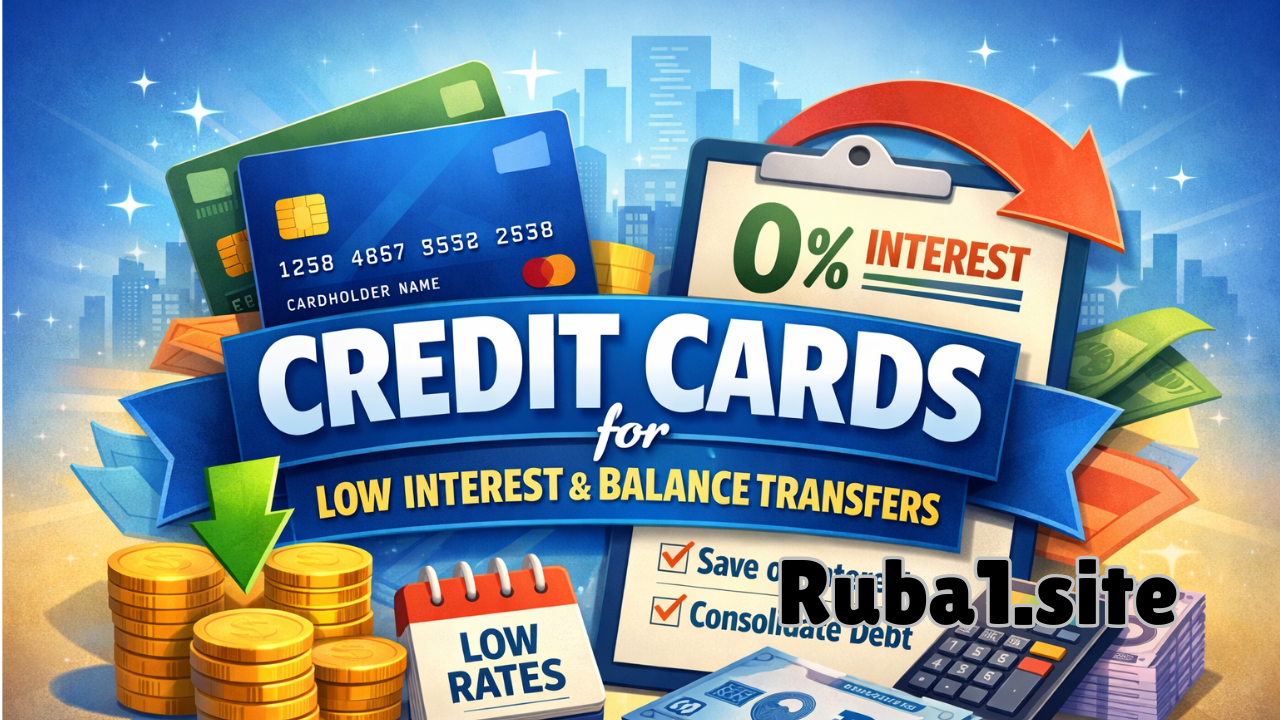
Credit card debt can become expensive very quickly, especially when interest rates are high. If you are carrying a balance on one or more credit cards, a balance transfer credit card could help you save a significant amount of money in interest charges.
A balance transfer allows you to move existing credit card debt from a high-interest card to a new card that offers a low-interest rate or a 0% introductory APR for a limited period. During this promotional period, more of your payment goes toward reducing the actual debt instead of paying interest.
In this guide from Ruba1.site, you’ll learn how balance transfer credit cards work, which cards are popular in 2026, and how to choose the right option for your financial situation.
What Is a Balance Transfer Credit Card?
A balance transfer credit card is designed to help consumers move debt from one credit card to another with a lower interest rate.
For example:
- Current Credit Card Debt: $5,000
- Current APR: 24%
- New Balance Transfer APR: 0%
- Introductory Period: 18–21 Months
Instead of paying high interest every month, you can focus on paying down the principal balance.
This strategy can potentially save hundreds or even thousands of dollars in interest.
Why Balance Transfer Cards Are Popular in 2026
Many consumers are using balance transfer cards because credit card interest rates remain relatively high.
Benefits include:
- Lower interest costs
- Faster debt repayment
- Simplified monthly payments
- Temporary 0% APR offers
- Better debt management
For people carrying large balances, a balance transfer card can provide valuable breathing room while paying down debt.
Best Low Interest Credit Cards for Balance Transfers in 2026
Wells Fargo Reflect® Card
The Wells Fargo Reflect Card is frequently ranked among the strongest balance transfer cards because of its lengthy introductory APR period.
Key Benefits:
- Long 0% introductory APR period
- No annual fee
- Helpful for large balances
Best For:
People who need extra time to pay off debt.
Citi Simplicity® Card
The Citi Simplicity Card is well known for its focus on debt management rather than rewards.
Key Benefits:
- Extended balance transfer promotion
- No annual fee
- Simple repayment experience
Best For:
Consumers focused entirely on eliminating debt.
BankAmericard® Credit Card
BankAmericard continues to be a popular option for balance transfers.
Key Benefits:
- Competitive introductory APR offer
- No annual fee
- Straightforward balance transfer process
Best For:
People looking for a simple debt payoff solution.
Citi Double Cash® Card
Unlike many balance transfer cards, Citi Double Cash offers rewards after the promotional period.
Key Benefits:
- Introductory balance transfer offer
- Cashback rewards
- No annual fee
Best For:
People who want both debt reduction and future rewards.
U.S. Bank Shield™ Visa® Card
This card has attracted attention because of its lengthy promotional period.
Key Benefits:
- Long introductory APR period
- Strong debt repayment flexibility
- No annual fee
Best For:
Consumers carrying larger balances.
Balance Transfer Credit Card Comparison Table
| Credit Card | Best For | Annual Fee | Main Advantage |
|---|---|---|---|
| Wells Fargo Reflect | Long Repayment Period | None | Extended 0% APR |
| Citi Simplicity | Debt Elimination | None | Simple Debt Management |
| BankAmericard | Easy Balance Transfers | None | Straightforward Terms |
| Citi Double Cash | Rewards After Payoff | None | Cashback Benefits |
| U.S. Bank Shield Visa | Large Balances | None | Long Intro APR |
How Much Money Can a Balance Transfer Save?
Let’s look at a simple example.
| Balance | Current APR | Estimated Interest Savings |
| $3,000 | 22% | Hundreds of Dollars |
| $5,000 | 24% | Significant Savings |
| $10,000 | 24%+ | Potentially Thousands |
The exact savings depend on your balance, current APR, transfer fee, and repayment speed.
Important Fees to Watch For
Many people focus only on the 0% APR offer and forget about transfer fees.
Common balance transfer fees include:
- 3% of the transferred amount
- 4% of the transferred amount
- 5% of the transferred amount
Before applying, calculate whether the interest savings outweigh the transfer fee.
In many cases, they do.
How to Choose the Right Balance Transfer Card
Consider the Introductory APR Period
A longer promotional period gives you more time to pay off debt.
Review Transfer Fees
Lower transfer fees can save money upfront.
Check Annual Fees
Most top balance transfer cards have no annual fee.
Evaluate Your Repayment Plan
Choose a card that provides enough time to eliminate the balance before the promotional rate expires.
Look Beyond Rewards
When paying off debt, interest savings are usually more important than reward points.
Common Balance Transfer Mistakes
Many consumers make avoidable mistakes when using balance transfer cards.
Avoid:
- Missing monthly payments
- Continuing to add new debt
- Ignoring transfer fees
- Failing to pay off the balance before the promotional period ends
- Applying without checking eligibility
A balance transfer only works when combined with a repayment strategy.
Tips for Paying Off Debt Faster
Create a Monthly Budget
Track income and expenses carefully.
Make More Than the Minimum Payment
Higher payments reduce debt faster.
Avoid New Purchases
Focus on paying down existing balances.
Use Automatic Payments
This helps prevent missed payments.
Set a Debt-Free Goal
Having a target date can improve motivation and consistency.
Are Balance Transfer Credit Cards Worth It?
For many consumers, the answer is yes.
If you are carrying high-interest credit card debt and can realistically pay down the balance during the promotional period, a balance transfer card can be one of the most effective debt-reduction tools available.
The key is to choose a card with favorable terms, understand all fees, and commit to a repayment plan.
Frequently Asked Questions
What is a balance transfer?
A balance transfer moves debt from one credit card to another card with a lower interest rate or a temporary 0% APR offer.
Do balance transfers hurt credit scores?
There may be a small temporary impact from a new application, but responsible usage can help improve your credit profile over time.
How long do 0% APR offers last?
Most balance transfer cards offer promotional periods ranging from 12 to 21 months, depending on the issuer.
Can I transfer debt between cards from the same bank?
In most cases, no. Many issuers do not allow balance transfers between their own credit card accounts.
Is a balance transfer fee worth paying?
Often yes. If the interest savings exceed the transfer fee, the transfer can still save substantial money.
Conclusion
Balance transfer credit cards remain one of the smartest debt-management tools available in 2026. By moving high-interest debt to a low-interest or 0% APR card, you can reduce interest costs, simplify payments, and accelerate your journey toward becoming debt-free.
Cards such as Wells Fargo Reflect, Citi Simplicity, BankAmericard, Citi Double Cash, and U.S. Bank Shield Visa continue to attract attention because of their strong balance transfer features and lengthy promotional periods. Before applying, compare fees, introductory APR periods, and repayment timelines to find the option that best fits your financial goals.
For more personal finance guides, credit card reviews, and money-saving strategies, keep visiting Ruba1.site.